UPDATE NEW SEASON'S POTATO CROP HARVEST SEASON 2026/27


With scattered rainfall in week commencing 12th of August, hope on normalisation of new crop lived up again. However since August 22nd the heat came back and leaves many spurs of uncertainty throughout Europe.
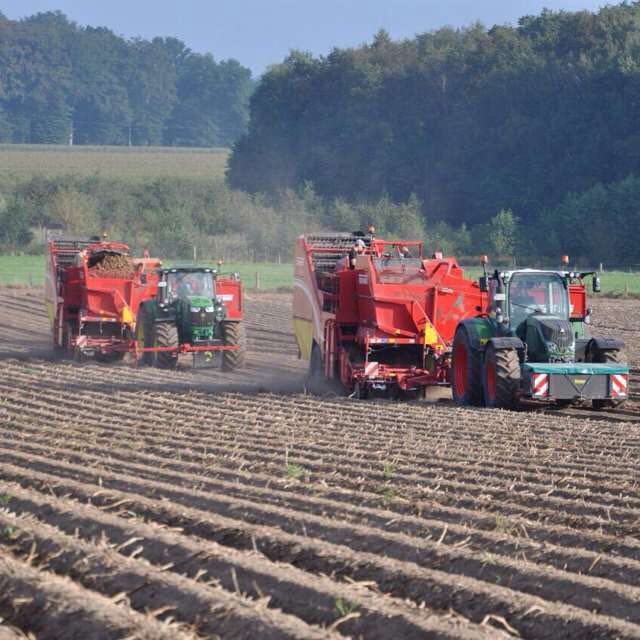
The liftings of early season varieties are nearly over and the industry has made the switch to semi-late varieties, prior to starting main season’s crop (potatoes for conservation) at the end of August, first days of September. Harvesting should end (in function of local weather and soil conditions) around the end of October and before the first night frost comes up.
Whereas in June 2018 it was clear that the entire potato harvest all over Europe would be a disaster, this year the situation is a lot more complicated. There are differences per country, per region, per village, yet even per farm. This has everything to do with the irregular local rainfall or to an even higher extent the lack of it.
Also the type of soil plays a role, with very poor results on sandy soils.
After the dramatic situation in 2018, plenty of farmers had massively invested in irrigation equipment, but the widely spread official ban on pumping ground waters curtailed the plans and considerably hit the expected yields in Flanders, North of France and parts of Central Germany.
The higher acreage may partly compensate for the loss of yield per hectare, but this will only become clear once the harvest is completed all over Europe.
Test liftings made in Belgium after 111 days of growth show following figures:
Bearing in mind the above, it remains very difficult to forecast the general outcome in North-Western Europe. After 3-4 weeks of liftings, more reliable figures should become available by the end of September.
Prices have come down when compared to season 2018/19, but the overall expected price collapse is out of question. It does not look like price levels of harvest season 2017/18 will even come near.
High-quality dehydrated and frozen potato products, vegetables and herbs designed for consistency, flavor, and long shelf life.